
His Divine Mercy

Updated: Jun 16

No soul is beyond His mercy. Not even yours.
If the worst sinner who ever lived can be washed clean in a single moment of trust, then there is hope for every one of us. That is the promise of Divine Mercy.
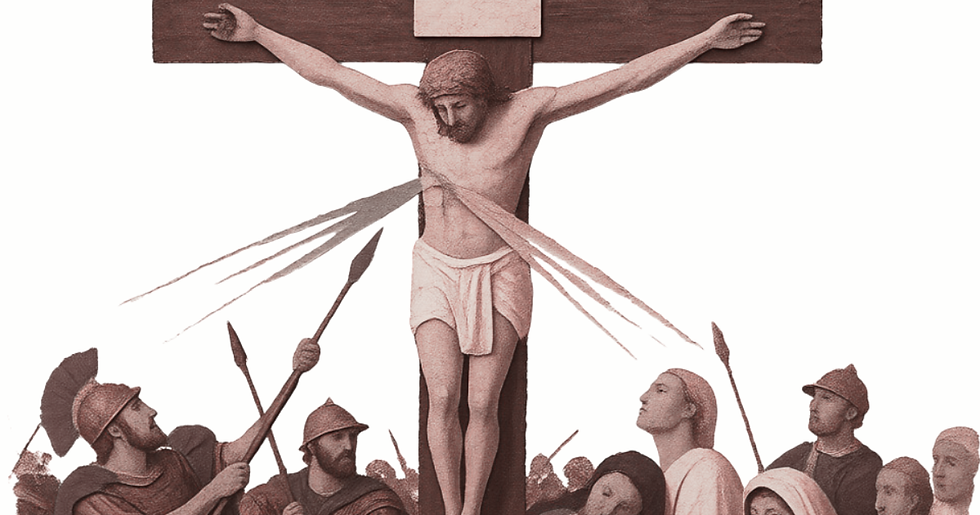
In the 1930s, in Poland, Jesus appeared to a humble, uneducated nun named Sister Faustina Kowalska. He came as the King of Mercy, dressed in white, with two rays of light streaming from His Heart. One pale, one red. The water that makes souls clean. The blood that gives them life. Both poured from the Heart that was opened on the cross.
He gave her a message for the whole world and asked her to write it down. She filled a diary with His words. The heart of it was simple. His mercy is greater than our sin. Always. He told her, "I do not want to punish aching mankind, but I desire to heal it, pressing it to My Merciful Heart."
How He asks us to receive it

The Image
Jesus asked for an image painted of Him as Faustina saw Him, signed with three words at the bottom: Jesus, I trust in You. The power is not in the brushwork. It is in the trust the image draws out of us.

The Chaplet
A short, powerful prayer for mercy, prayed on ordinary rosary beads. Jesus promised that even the most hardened sinner, praying it once with trust, would receive His grace.

The Novena
Nine days of the Chaplet, beginning on Good Friday. Each day He carries a different group of souls into the ocean of His mercy, all the way to the lukewarm and the indifferent on the last day.
The Hour of Great Mercy
Three o'clock in the afternoon, the hour He died. He asked us to pause, even for a moment, and immerse ourselves in His Passion.

Divine Mercy Sunday
The first Sunday after Easter. Jesus called it a refuge for every soul, especially the ones who feel furthest from Him.
Whatever you have done, however far you have wandered, His answer is the same.
Come back. There is mercy here, and it is for you.
"The greater the sinner, the greater the right he has to My mercy." Words of Jesus to St. Faustina, from her Diary


Comments